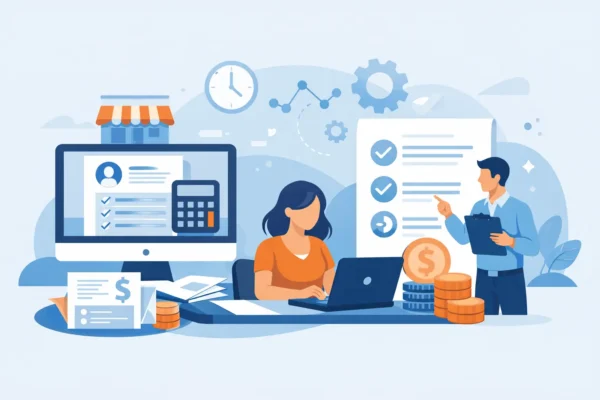
Miss a payroll tax deposit or miscalculate overtime once, and a normal workweek can turn into a costly problem fast. That is why many owners eventually ask, what is payroll processing, and what exactly should be happening behind the scenes every pay period?
Payroll processing is the full process of calculating employee pay, withholding taxes and deductions, paying employees on time, and filing the required payroll taxes and reports. For a small business, it is not just about cutting checks. It is an ongoing system that affects cash flow, compliance, employee trust, and year-end reporting.
If you run a restaurant, plumbing company, delivery service, office, or another growing business, payroll can look simple from the outside. Hours go in, money goes out. In practice, there are several moving parts, and small errors can create bigger issues later.
What Is Payroll Processing?
At its core, payroll processing is the administrative and compliance work involved in paying your employees correctly. That includes tracking hours, calculating gross pay, subtracting taxes and other deductions, issuing net pay, and sending the proper payments and filings to tax agencies.
For hourly employees, payroll may involve regular hours, overtime, shift differentials, bonuses, reimbursements, or paid time off. For salaried employees, it may include benefit deductions, garnishments, and employer tax responsibilities. If you use contractors too, that adds a separate layer because contractors are usually not processed through payroll the same way employees are.
This is where many small business owners get tripped up. Payroll is partly math, but it is also timing, documentation, and compliance. The numbers have to be right, and they have to be reported and deposited on schedule.
What payroll processing includes each pay period
Every payroll run starts with collecting accurate information. That usually means employee hours, pay rates, salary amounts, overtime, bonuses, commissions, and any paid leave taken during the period. If time tracking is inconsistent, payroll becomes harder right away.
Once the pay data is collected, gross wages are calculated. Then deductions are applied. These often include federal income tax withholding, Social Security, Medicare, state income tax where applicable, employee benefit premiums, retirement contributions, wage garnishments, and other authorized deductions.
After deductions, the employee receives net pay, either by direct deposit or paper check. But the work is not finished there. The employer also has to account for its own payroll tax obligations, such as the employer share of Social Security and Medicare, federal and state unemployment taxes, and any local payroll requirements.
Then comes the filing and payment side. Payroll taxes have to be deposited according to the business’s required deposit schedule. Payroll reports must be filed accurately and on time. At the end of the year, W-2s must be prepared for employees, and other payroll-related filings must be completed correctly.
Why payroll matters more than most owners expect
The obvious reason payroll matters is that employees expect to be paid correctly and on time. That alone is enough to make it a priority. If payroll is wrong, trust drops quickly.
There is also the compliance side. Payroll errors can lead to tax penalties, interest, worker classification problems, and wage disputes. A mistake with overtime, withholdings, or new hire reporting may seem small in the moment, but it can become expensive if it repeats over several pay periods.
Payroll also affects cash flow. If you are not planning for payroll taxes, benefit deductions, or workers’ compensation costs, your bank balance may look healthier than it really is. Good payroll processing gives a clearer picture of what labor actually costs.
For small businesses, that visibility matters. Owners often make hiring, scheduling, and pricing decisions based on labor numbers. If payroll data is off, those decisions can be off too.
The three stages of payroll processing
A practical way to understand payroll is to break it into three stages: before payroll, during payroll, and after payroll.
Before payroll
Before payroll can run correctly, your business needs the right setup. That includes employer tax registration, employee onboarding documents, tax withholding forms, pay rates, classification as hourly or salaried where appropriate, and a defined pay schedule.
This stage also includes collecting accurate time records, confirming any changes in pay, and reviewing deductions or benefit elections. If the setup is wrong, payroll errors tend to repeat until someone catches them.
During payroll
During the payroll run, pay is calculated and reviewed. Hours are checked, overtime is applied, gross pay is determined, taxes and deductions are withheld, and final pay amounts are approved. This is the stage most owners think of when they hear the term payroll processing.
Even here, there are trade-offs. Moving fast saves time, but rushing can lead to mistakes. Over-checking every payroll may slow operations down. The right approach depends on your headcount, pay structure, and how often employee data changes.
After payroll
After payroll is issued, the compliance work continues. Tax liabilities need to be paid, payroll records need to be stored, payroll journals may need to be posted to bookkeeping, and quarterly and annual forms must be prepared.
This is the stage many businesses underestimate. Paying employees is only part of payroll. Reporting and recordkeeping are what keep the business protected if questions come up later.
Common payroll mistakes small businesses make
Most payroll problems do not start with bad intentions. They start with busy owners trying to handle one more task themselves.
One common issue is misclassifying workers. Treating an employee like an independent contractor can create tax and compliance problems. Another is failing to calculate overtime correctly, especially when bonuses or multiple pay rates are involved.
Late tax deposits are another frequent problem. Owners may process pay on time but miss the separate deadlines for payroll tax payments. Inaccurate employee setup can also cause trouble, especially if tax withholding forms, benefit deductions, or state requirements are entered incorrectly.
Some businesses also disconnect payroll from bookkeeping. That creates confusion around labor expenses, tax liabilities, and account balances. Payroll works best when it is part of a broader financial system, not a standalone task.
Should you do payroll in-house or outsource it?
It depends on your size, complexity, and available time. A very small company with one or two straightforward employees may be able to manage payroll internally for a while. But even then, the owner still has to stay current on tax deadlines, filing requirements, and wage rules.
As soon as the business grows, payroll usually gets more complicated. Multiple employees, changing hours, PTO policies, benefit deductions, garnishments, and state reporting can turn payroll into a recurring administrative burden.
Outsourcing payroll often makes sense when the cost of mistakes, missed time, and stress is higher than the service fee. For many small employers, that point arrives sooner than expected. Reliable payroll support can save time, reduce penalties, and give you more confidence that each pay period is being handled correctly.
A provider that also understands bookkeeping and taxes can be especially helpful. Payroll does not live in a vacuum. It affects your financial statements, tax filings, and planning throughout the year.
What to look for in payroll support
Small businesses usually do not need enterprise-level payroll complexity. They need accuracy, responsiveness, and practical support.
A good payroll partner should help you process pay accurately, keep up with tax filings and deposit schedules, maintain clear records, and answer day-to-day questions without making the process harder than it needs to be. If your business also has workers’ compensation, bookkeeping needs, or tax filing deadlines, it helps to work with a team that sees the full picture.
That is where a hands-on provider can make a real difference. MYServices works with small businesses that want payroll handled properly without building an internal back-office department. The goal is simple: save time, reduce stress, and help you stay compliant while keeping payroll connected to the rest of your financial operations.
What is payroll processing really about?
On paper, payroll processing is the system of paying employees and handling taxes. In real business terms, it is about protecting your company from preventable problems while making sure your team is paid correctly every time.
When payroll is done well, it fades into the background. Employees are paid, reports are filed, your records stay organized, and you can focus on running the business. That is how it should be.
If payroll has started taking too much time, creating uncertainty, or exposing your business to avoidable mistakes, that is usually a sign it needs more attention, not less. A good payroll process does more than move money. It gives your business structure, consistency, and one less thing to worry about next payday.