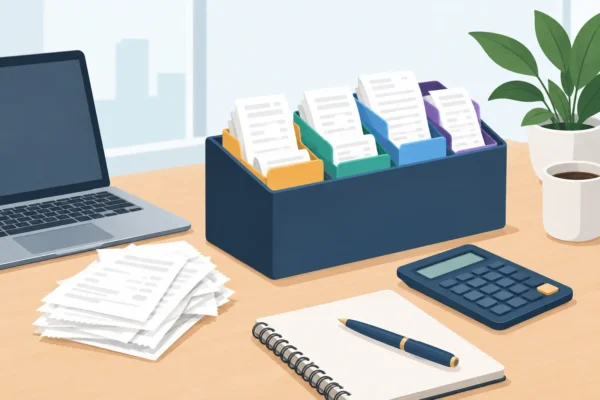
A missing $18 supply receipt may not feel urgent on a busy Tuesday. Multiply that small gap across a year of fuel, tools, client meals, repairs, and software subscriptions, however, and it can mean missed deductions or difficult questions at tax time. Learning how to organize tax receipts gives your business a clearer financial record, a faster tax-prep process, and less stress when someone asks where a number came from.
For a small business owner, the goal is not to create an accounting department in the back office. It is to build a simple, repeatable routine that keeps receipts connected to real business expenses. The best system is the one your team will actually use consistently.
Start with one place for every receipt
Receipts get lost when they have too many possible homes: a glove compartment, a wallet, a desk drawer, an employee’s phone, or a stack of mail. Choose one primary digital storage location and one temporary physical holding spot. The digital file should be your long-term record; the physical spot is only for paper receipts waiting to be scanned or reviewed.
A secure cloud folder, receipt-capture app, or bookkeeping platform can work well. What matters is that it is protected with strong access controls, backed up, and easy to reach when you or your bookkeeper need it. Avoid keeping the only copy on one employee’s personal phone or computer.
For paper receipts, use a clearly labeled envelope or file tray marked “To Scan.” Make scanning part of the weekly routine, then move scanned originals to a monthly folder if you plan to keep them. Do not let the tray become a permanent storage system.
How to organize tax receipts by category and date
Your receipt system should make it easy to answer three questions: What was purchased? Why was it a business expense? When did it happen?
Create folders by tax year first. Within each year, organize receipts by expense category and month. A service contractor, for example, may use categories such as vehicle expenses, tools and equipment, materials, advertising, insurance, office supplies, subcontractors, and meals. A restaurant may need categories for food supplies, cleaning supplies, small equipment, repairs, uniforms, delivery expenses, and merchant fees.
A practical folder structure might look like this:
- 2026 Tax Receipts
- January
- February
- March
- Vehicle and Mileage
- Equipment and Tools
- Meals and Travel
- Contractor and Vendor Payments
- Other Business Expenses
You do not need every folder listed above if it does not fit your operation. The point is to use categories that match your bookkeeping and the way you spend money. If you regularly buy materials for jobs, separating materials from tools can make job-cost tracking and tax preparation much easier.
Use a consistent file name for each scanned receipt. A useful format is `YYYY-MM-DD_Vendor_Amount_Category`. For example: `2026-03-12_HomeDepot_86.42_Materials`. This gives you a searchable record even before opening the file.
Capture the business purpose before you forget it
A receipt alone does not always explain whether an expense was business-related. This is especially true for meals, travel, vehicle costs, client gifts, and purchases that could be personal or business use.
Add a short note at the time of purchase. For a meal, record who attended and the business purpose, such as “Lunch with prospective plumbing client – discussed annual maintenance contract.” For a supply purchase, note the job or customer when relevant. For mileage, record the date, destination, miles driven, and business reason.
This step protects you from trying to reconstruct the story months later. Your bank statement can show that you spent money at a restaurant, but it usually cannot show why the expense was connected to your business. The same applies to cash purchases and reimbursed employee expenses.
Match receipts to your bank and card activity
Organized receipt folders are helpful, but they are most valuable when they match your bookkeeping records. Each month, compare your business bank account and credit card transactions with the receipts you captured. Confirm that every transaction is categorized correctly and that larger or unusual expenses have supporting documentation.
This process catches common problems early: duplicate charges, personal purchases on a business card, missing receipts, uncategorized transfers, and employee reimbursements that were never properly documented. It also helps prevent a frantic cleanup project before filing deadlines.
If an employee makes purchases for the business, set a clear deadline for submitting receipts. Many small employers require receipts within a few days of the purchase or before the next payroll period. The policy does not need to be complicated, but it should be consistent. Employees should know where to submit receipts, what information to include, and when reimbursement will be processed.
Keep personal and business spending separate
Mixing personal and business spending creates more work for everyone. It can also make deductions harder to support and reduce the usefulness of your financial reports. Open and use a dedicated business checking account and business credit card whenever possible.
There will be exceptions, especially for new businesses or emergency purchases. When a personal card is used for a legitimate business cost, save the receipt and clearly mark it as an owner-paid expense or employee reimbursement. Your bookkeeper can then record it correctly rather than treating it as an unexplained transaction.
The reverse matters just as much. If you accidentally pay for a personal item from the business account, identify it promptly. It may need to be recorded as an owner draw, shareholder distribution, or another non-business transaction depending on your entity type. Leaving it coded as an expense can distort your books and create problems at tax time.
Know which receipts deserve extra attention
Every deductible expense should have support, but some categories require more careful records because they receive closer scrutiny or involve special rules. Meals are a common example. The amount paid is only part of the record; you also need the business purpose and other relevant details.
Vehicle expenses require a choice between methods in many cases, and the records needed can differ. If you use the standard mileage method, maintain a mileage log rather than relying only on gas receipts. If you claim actual vehicle expenses, keep records for fuel, repairs, insurance, registration, and other eligible costs, while separating personal use from business use.
For equipment, computers, furniture, or other higher-cost purchases, keep the invoice, proof of payment, and financing documents if applicable. These assets may be deducted differently from everyday supplies. Vendor invoices, contractor payments, rent, insurance, and payroll-related costs should also be easy to locate because they often affect multiple tax and compliance filings.
Set a weekly and monthly receipt routine
Receipt organization fails when it depends on memory. Put it on the calendar instead. A 10- to 15-minute weekly check is often enough to scan paper receipts, upload photos, add business-purpose notes, and follow up on missing employee documentation.
Then schedule a more complete monthly review after bank and card statements are available. Reconcile transactions, confirm categories, and flag anything that needs an answer. This is also a good time to review subscriptions and recurring charges. You may find services you no longer use or expenses that should be assigned to a specific job, department, or owner.
The right rhythm depends on transaction volume. A plumber making several supply runs each week may need a more frequent routine than a consultant with a handful of monthly expenses. Businesses with multiple employees should not wait until year-end, because gathering receipts from former employees is much harder after they leave.
Store records long enough to support your return
Tax record retention is not one-size-fits-all. Many businesses keep tax returns and supporting records for at least three years, but longer retention may be wise depending on the type of record, the filing, your state requirements, asset purchases, payroll records, or potential tax issues. Some documents, such as records supporting property basis, may need to be retained longer.
A sensible approach is to keep digital copies of receipts, invoices, bank statements, tax returns, payroll reports, and major purchase documents in year-based folders. Before deleting older records, ask your tax professional what applies to your business and location. Storage is inexpensive compared with trying to replace documentation after the fact.
Let your bookkeeping system do part of the work
Receipt organization should support your books, not become a second full-time job. A good bookkeeping process connects source documents to transactions, keeps categories consistent, and makes reports useful throughout the year. That gives you more than a cleaner tax return. It helps you see where cash is going, whether jobs are profitable, and which expenses are increasing.
If receipts are piling up or your records are several months behind, start with the current month and work backward in manageable blocks. MYServices can help small business owners put practical bookkeeping and tax-document routines in place, so records stay organized before deadlines arrive.
A simple receipt habit today can protect deductions, reduce year-end pressure, and give you a much clearer picture of the business you are working hard to build.