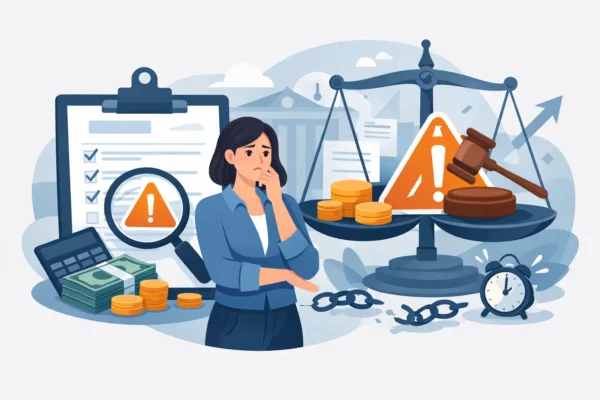
One payroll run goes out late, a tax deposit is off by a few hundred dollars, or an employee’s overtime gets calculated the wrong way. If you are asking, can payroll errors trigger penalties, the short answer is yes. The harder truth for small business owners is that payroll mistakes can lead to more than one problem at the same time: tax penalties, wage claims, unhappy employees, and extra cleanup work that steals time from running the business.
For a small employer, payroll is not just an administrative task. It is a compliance function. That means even minor-looking errors can create real costs if they affect tax filings, employee pay, or required reporting. The risk is not the same in every situation, but the exposure is real enough that payroll should never be treated as a set-it-and-forget-it process.
Can payroll errors trigger penalties from the IRS or state agencies?
Yes, and that is usually where the biggest concern starts. Federal and state agencies expect payroll taxes to be calculated correctly, withheld correctly, deposited on time, and reported accurately. When one of those steps breaks down, penalties can follow.
A common example is depositing payroll taxes late. If federal income tax withholding, Social Security, and Medicare taxes are not deposited by the required deadline, the IRS can assess penalties based on how late the payment is. Even when the amount seems manageable at first, penalties and interest can grow quickly if the issue is not caught and corrected.
Filing errors can also trigger problems. If quarterly payroll returns are filed late, filed with incorrect figures, or do not match the amounts actually paid and deposited, that mismatch may lead to notices, penalties, or a request for explanation. State unemployment filings can create similar issues. Some states move fast when payroll tax amounts do not reconcile.
There is also a practical side to this. Once an agency notice arrives, you are no longer just fixing payroll. You are responding to a compliance issue, documenting corrections, and often paying someone to help sort it out.
Which payroll mistakes are most likely to cause fines?
Not every payroll error leads to a penalty, but certain mistakes are far more likely to attract attention.
Late tax deposits are high on the list because they directly affect government collections. Late payroll tax return filings also tend to create immediate exposure. Misclassifying workers can be another expensive problem. If someone is treated as an independent contractor when they should have been on payroll as an employee, the business may face back taxes, penalties, and interest, along with possible wage and hour issues.
Wage calculation mistakes matter too. Underpaying overtime, missing minimum wage rules, or failing to pay final wages according to state law may not always start with a tax penalty, but they can lead to labor complaints, state enforcement actions, and additional damages. For employers in restaurants, delivery, trades, and other hourly environments, these errors can happen more easily than owners expect because schedules, tips, job codes, and rate changes create more moving parts.
Even incorrect employee data can create trouble. A wrong Social Security number, wrong withholding setup, or inaccurate year-end wage reporting may require corrections and increase the chance of notices. The mistake itself may look small, but the cleanup can be time-consuming.
Why small businesses are especially vulnerable
Large companies usually have internal payroll teams, layered approvals, and software controls. Small businesses often have one owner, office manager, or bookkeeper handling everything while also dealing with customers, staffing, purchasing, and day-to-day operations. That is where payroll errors start.
In many cases, the problem is not neglect. It is overload. A busy owner may run payroll late after a holiday weekend. A raise gets applied to regular hours but not overtime. A new hire is added without complete tax forms. A bonus is paid without proper tax treatment. These are common mistakes, and they happen most often when the process depends too heavily on one person who is already stretched thin.
Cash flow pressure can make matters worse. Some employers delay tax deposits because they are trying to cover rent, inventory, or payroll itself. That choice can backfire fast. Payroll taxes are not flexible operating capital, and agencies do not treat them that way.
Can payroll errors trigger penalties even if the mistake was unintentional?
Yes. Good intentions do not cancel compliance requirements. Agencies generally focus on whether the taxes were deposited, whether reports were filed correctly, and whether employees were paid according to the law. If the answer is no, the fact that it was accidental may not prevent a penalty.
That said, intent can matter in how severe the issue becomes. An isolated first-time mistake that is corrected quickly may be easier to resolve than repeated problems or signs that payroll obligations were knowingly ignored. In some cases, penalty relief may be available, but relying on that is not a strategy. It is a fallback.
The better approach is to catch and fix errors before they turn into a pattern. The earlier a problem is identified, the more options you usually have to correct it with less cost and less disruption.
What happens after a payroll mistake is discovered?
It depends on the type of error. If an employee was underpaid, the correction should usually happen as quickly as possible, with clear documentation showing what was missed and how it was fixed. If taxes were underwithheld or underdeposited, the business may need to make up the difference and amend a filing. If a return was incorrect, a corrected form may be required.
Timing matters. Waiting too long can turn a manageable issue into a larger one because interest and penalties continue to build, and employee confidence starts to slip. People notice when their pay is wrong, and repeated payroll mistakes can damage trust even if every dollar is eventually corrected.
This is also where many businesses realize they need better payroll controls. Fixing one error is helpful. Fixing the process that caused it is what protects the business going forward.
How to reduce payroll penalty risk without overcomplicating your business
The goal is not to build a corporate payroll department inside a small company. The goal is to create a process that is accurate, consistent, and easy to manage.
Start with a clear payroll calendar. Deposit dates, pay dates, filing deadlines, and year-end reporting deadlines should not live in someone’s memory. They should be documented and reviewed. Next, make sure employee classifications, pay rates, overtime rules, and withholding forms are updated whenever staffing changes happen.
It also helps to reconcile payroll regularly instead of waiting until quarter-end or year-end. When wage totals, tax withholdings, and deposits are reviewed each pay period or each month, errors tend to surface earlier. That reduces the chance of a surprise notice later.
Software can help, but software alone is not enough. A system is only as accurate as the information entered into it and the person reviewing the output. Small businesses often benefit most from a hands-on payroll partner who understands both processing and compliance. That is especially true when payroll connects to bookkeeping, tax filings, workers’ compensation reporting, or multi-state employees.
For many employers, outsourcing is less about convenience than risk control. A dependable payroll process saves time, but it also reduces the odds of late deposits, missed filings, and reporting mistakes that create unnecessary costs. That practical support matters when you do not have room in your week for payroll cleanup.
When it makes sense to get help
If payroll has become reactive, if notices are showing up, or if you are never fully sure whether taxes were paid and filed correctly, it is time to get support. The same is true if your business is growing, adding employees, dealing with overtime, or juggling different pay structures. Complexity does not need to be extreme before payroll starts becoming risky.
A good payroll partner should do more than run checks. They should help you stay current, flag issues before they turn into penalties, and make payroll feel predictable again. That is the difference between processing payroll and managing payroll responsibly.
At MYServices, that kind of support is built around the reality small business owners face every week: limited time, constant demands, and no margin for expensive avoidable mistakes.
Payroll errors are common, but they should not become a regular cost of doing business. When payroll is handled with consistency and oversight, you protect your cash flow, your employees, and your peace of mind.