A vendor calls asking when they can expect payment. Another invoice is sitting in someone’s email inbox. Your bookkeeper is trying to close the month, but no one is certain which bills are due this week. These are the daily problems that accounts payable outsourcing is designed to solve for small businesses.
For a growing restaurant, trade company, delivery service, or office-based business, paying bills should not require chasing paper, sorting through email attachments, and hoping nothing gets missed. A reliable process protects vendor relationships, supports accurate bookkeeping, and gives you a clearer view of the cash your business actually has available.
What Accounts Payable Outsourcing Covers
Accounts payable is the process of receiving, reviewing, approving, recording, and paying the bills your business owes. That can include supplier invoices, rent, utilities, subcontractor bills, equipment payments, and recurring operating expenses.
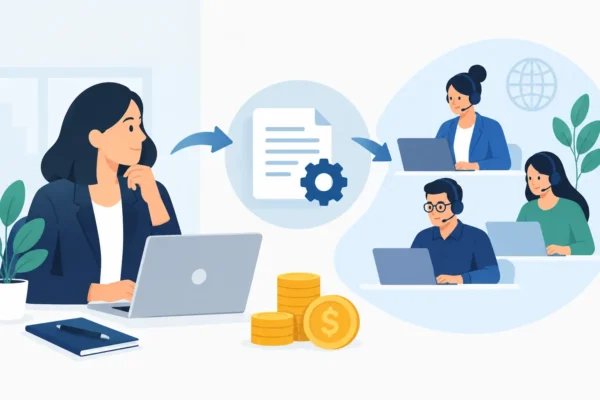
With accounts payable outsourcing, a trained outside team handles all or part of that process under rules you approve. The level of support varies. Some businesses need help entering and organizing invoices. Others want a provider to manage the full workflow, from invoice receipt through payment scheduling and reconciliation.
The goal is not simply to move bill paying outside your company. The goal is to create a dependable system with clear records, appropriate approvals, and fewer last-minute surprises.
A good provider will work from your established approval limits and payment preferences. For example, an office manager may approve routine supply invoices, while the owner approves equipment purchases or any bill over a set dollar amount. The outsourced team should not make spending decisions for your business. It should give you an organized process for making those decisions quickly.
Why Small Businesses Fall Behind on Payables
Most owners do not neglect accounts payable because they do not care. They fall behind because operating the business takes priority. A plumber is out on service calls. A restaurant owner is covering a shift. A contractor is managing a jobsite. By the time they return to the office, invoices have piled up.
When bill processing is handled inconsistently, the effects can spread quickly. A missed invoice may lead to a late fee or an interruption in supplies. Paying a bill twice ties up cash unnecessarily. Failing to record expenses on time can make your bookkeeping reports less useful, which makes it harder to plan payroll, taxes, and upcoming purchases.
There is also a fraud concern. An emailed invoice that looks legitimate may not be legitimate. A rushed employee can change payment details without independently confirming them, or a duplicate bill can slip through. Small businesses need practical controls just as much as larger companies do, even if the process is simpler.
When Accounts Payable Outsourcing Makes Sense
Outsourcing is often a strong fit when bill processing depends on one busy owner or employee. If that person takes a vacation, gets sick, or leaves the business, invoices should not stop moving. External support can create continuity without requiring you to hire a full-time accounting employee.
It can also make sense when your business is growing. More locations, new vendors, higher order volume, and additional projects all create more invoices to track. The need may not justify a full accounting department, but it may be too much for a part-time internal process.
Businesses with seasonal swings can benefit as well. A landscaping company, restaurant, or contractor may have periods when invoice volume increases sharply. Outsourced support can be more flexible than adding permanent staff for a workload that changes during the year.
That said, outsourcing is not automatically the right answer for every company. If your invoice volume is very low and you already have a disciplined internal process, you may only need better bookkeeping routines or software setup. The best decision depends on the number of invoices, how complicated approvals are, who currently handles payments, and how much visibility you have over cash flow.
The Business Benefits Go Beyond Paying Bills
The immediate benefit is time. Owners and managers spend less time entering data, searching for invoices, and responding to vendor questions. That time can go back into sales, customer service, staffing, and the work that keeps the business moving.
The bigger benefit is control. When invoices are recorded consistently, you can see what is due now, what is coming due soon, and where your money is going. That supports better cash planning. Instead of checking the bank balance and guessing, you can plan around payroll, tax payments, loan obligations, and vendor due dates.
Accurate accounts payable also strengthens your bookkeeping. Expenses can be categorized correctly and matched to the proper period, giving you more useful financial reports. When tax time arrives, organized records reduce the scramble to reconstruct months of business activity.
Vendor relationships improve, too. Reliable payments help maintain trust with the suppliers and service providers your business depends on. If cash is tight, an organized payable process helps you communicate early and prioritize obligations rather than reacting after an account has become overdue.
Keep Approval and Payment Controls in Place
Outsourcing should reduce risk, not create a new blind spot. Before handing off any portion of accounts payable, decide who can approve bills, who can release payments, and how changes to vendor banking information will be verified.
A basic separation of duties is valuable. The person entering an invoice should not be the only person approving it and sending payment. Even in a small company, you can create simple checks. An owner might review a weekly payment list, while an outside team prepares the invoices and supporting documentation.
Vendor banking changes deserve extra attention. Fraudsters often send convincing emails asking businesses to update ACH or wire instructions. A safe process requires calling a known contact at the vendor using a trusted phone number, not a number provided in the change request. Never rely on an email alone for payment detail changes.
You should also know where documents are stored, who can access them, and how long records are retained. Secure document exchange and clear reporting are not extras. They are part of running a responsible financial process.
What to Look for in an Outsourced Provider
The right provider should understand the realities of a small business. You need responsive people who can answer questions in plain language, not a system that leaves you waiting for help when a vendor needs an answer.
Ask how invoices are received and tracked, how approval requests are sent, and how payments are scheduled. Confirm whether the provider can work with your bookkeeping process and provide regular reports showing open bills, due dates, and payment history.
It is also worth asking how the provider handles errors. No process is perfect. What matters is whether there is a clear method for finding mistakes, correcting records, and preventing repeat problems. A provider should be comfortable explaining its controls, security practices, and communication schedule.
Cost matters, but the lowest monthly price is not always the lowest overall cost. Consider the time your staff spends on invoices today, the cost of late fees, the risk of duplicate payments, and the frustration caused by unclear records. A service that prevents expensive mistakes and gives you better financial visibility can deliver value well beyond data entry.
Start With a Process Review
Before moving accounts payable outside your business, take an honest look at your current workflow. Gather a sample of invoices, identify where they arrive, and document who approves them. Note the recurring bills that should never be missed, along with the vendors that require special attention.
Then decide what you want to retain internally. Many owners prefer to approve payments themselves while delegating invoice collection, coding, tracking, and reporting. That arrangement can provide meaningful relief while keeping final payment authority where it belongs.
MYServices can help small businesses connect accounts payable support with dependable bookkeeping, payroll administration, and tax-ready financial records. The right setup is built around your business, your cash flow, and the level of oversight you want to maintain.
A bill-paying process should not keep you up at night or pull you away from customers. Put clear approvals, accurate records, and reliable follow-through in place, and your finances will be easier to manage one invoice at a time.