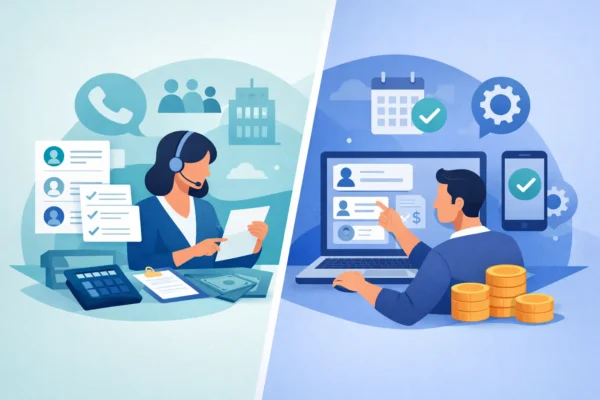
Miss one payroll tax deposit or classify an employee the wrong way, and payroll stops being an admin task and starts becoming an expensive problem. That is why the payroll service vs payroll software decision matters so much for small business owners. The right choice can save time, reduce stress, and help you avoid penalties. The wrong one can leave you fixing preventable mistakes after hours.
For a small employer, payroll is not just about cutting checks. It affects tax filings, cash flow, employee trust, workers’ comp reporting, and year-end forms. If you run a restaurant, a delivery company, a trade business, or a growing office team, you need a payroll process that works consistently even when your week does not.
Payroll service vs payroll software: what is the difference?
Payroll software is a tool your business uses to run payroll internally. You or someone on your team enters hours, approves payroll, manages updates, and handles the follow-through. Depending on the platform, the software may calculate wages and taxes, help file forms, and automate direct deposit. But your business is still responsible for making sure the data is correct and deadlines are met.
A payroll service means you are working with a provider that handles payroll processing and often much more. That can include payroll tax filings, new hire reporting, year-end forms, compliance support, workers’ comp administration, and help when something does not look right. Instead of buying a tool and managing the process yourself, you are outsourcing an ongoing business function.
That distinction matters. Software gives you more direct control. A service gives you more hands-on support and oversight.
When payroll software makes sense
Payroll software can be a good fit for very small businesses with simple payroll and reliable internal admin help. If you have a steady payroll schedule, a small number of employees, straightforward pay rates, and one person who can stay on top of filings and notices, software may do the job well.
It can also work if you want immediate visibility into payroll data and prefer a self-service model. Some owners like being able to log in, run payroll on their own schedule, and make changes without contacting a provider. If your payroll is clean and predictable, that control can feel efficient.
The biggest advantage is often perceived cost. Monthly software pricing can look lower than a full-service payroll arrangement. For a startup or owner-operator with only a handful of employees, that difference can seem significant.
But software only stays cost-effective when your payroll stays simple. If your team grows, overtime becomes common, local tax issues show up, or employee classifications get more complicated, the time and risk involved start to rise. What looked cheaper at the start can become expensive once you factor in internal labor, corrections, and compliance exposure.
When a payroll service is the better choice
A payroll service is usually the better fit for businesses that need reliability more than another login. If your office manager already wears five hats, adding payroll compliance to that list may not be realistic. If you are dealing with hourly teams, varying schedules, new hires, garnishments, multi-state issues, or workers’ comp reporting, payroll gets complicated fast.
This is where service has real value. You are not just paying for processing. You are paying for support, accuracy, and accountability. A good provider helps you stay current on deadlines, identify problems early, and keep payroll tied into the rest of your back-office operations.
That matters for small businesses because payroll does not exist in isolation. It touches bookkeeping, tax planning, cash flow, and reporting. A service provider can help those pieces work together instead of leaving you to reconcile one system against another after the fact.
For many employers, the biggest benefit is peace of mind. When a question comes up about tax notices, employee setup, wage reporting, or year-end forms, you have a person to call. That is very different from searching a help center while trying to make payroll before Friday.
Cost is not as simple as monthly pricing
A lot of payroll decisions get reduced to one question: which option costs less per month? That is understandable, but it is not the right way to compare payroll service vs payroll software.
Software has a visible subscription price, but it also has hidden operating costs. Someone has to manage employee changes, check payroll accuracy, track filing deadlines, respond to tax notices, and correct mistakes. If that person is the owner, the cost is your time. If it is an employee, the cost includes wages, training, and the risk of turnover.
A payroll service may have a higher monthly fee, but it can lower total cost by preventing penalties, reducing rework, and freeing up time for revenue-producing tasks. It can also help small businesses avoid paying separately for related support such as payroll tax handling, workers’ comp administration, or coordination with bookkeeping.
The real question is not whether software is cheaper on paper. It is whether your current setup is costing you time, stress, and avoidable errors.
Compliance is where the trade-off becomes clear
If payroll were only about calculations, software would solve most problems. The harder part is compliance. Payroll tax deposits, quarterly filings, year-end reporting, employee classification, recordkeeping, state requirements, and wage rules all create risk for small employers.
Software can help you complete tasks, but it usually depends on correct setup and user input. If your payroll codes are wrong, if an employee is set up incorrectly, or if tax settings are not configured properly, automation can move the mistake along faster.
A payroll service adds a layer of review and practical guidance. That does not mean every provider is equal, and it does not mean outsourcing removes every risk. You still need to give accurate information and review reports. But a service model is generally stronger when compliance is a top concern because there is active involvement from people who handle payroll issues regularly.
For small businesses without a dedicated HR or finance department, that support is often the deciding factor.
Payroll service vs payroll software for growing businesses
Growth changes payroll. A company with four employees and fixed salaries has different needs than a company with fifteen employees, overtime, multiple pay rates, and frequent onboarding. What worked at one stage can become a bottleneck later.
Payroll software can still work during growth if you have solid internal processes and someone who owns payroll administration. But many growing businesses hit a point where payroll starts consuming too much management attention. Every new hire creates paperwork. Every job classification affects reporting. Every state or local requirement adds another detail to track.
That is why outsourced payroll becomes more attractive as complexity increases. It gives owners room to focus on staffing, sales, scheduling, and operations instead of spending that time checking tax forms and payroll reports.
This is especially true for service businesses where payroll changes week to week. Restaurants, trades, field service companies, and delivery operations often have variable hours, changing crews, and tight margins. In those settings, dependable payroll support is not a luxury. It helps protect cash flow and keep the business running smoothly.
How to choose the right option
Start with the reality of your business, not the marketing promise of a platform. Ask yourself who will actually run payroll, who will review filings, and who will handle a problem when a notice arrives. If the honest answer is, “probably me, late at night,” software may not be the bargain it appears to be.
You should also look at how payroll connects to your other needs. If you already need help with bookkeeping, tax filing, or workers’ comp administration, a payroll service may create more value because those functions affect one another. Bundled support often makes more sense than managing separate vendors and systems.
On the other hand, if your payroll is simple, your internal admin process is strong, and you genuinely want a self-managed system, software may be enough for now. There is nothing wrong with that choice as long as you are clear about the responsibilities that come with it.
For many small employers, the best answer is not the cheapest tool. It is the option that reduces mistakes, saves management time, and gives you confidence that payroll is being handled correctly. That is why businesses often move toward a service model as soon as payroll starts creating friction.
At MYServices, that is the point we see most often. Owners do not come looking for payroll help because they love outsourcing. They come because they are tired of worrying about filings, corrections, and whether something got missed.
If payroll is taking too much time, causing too much uncertainty, or pulling attention away from running your business, that is usually your answer. The right payroll setup should make payday feel routine, not risky.